A Family Test Drive Checklist for a Used Ford Everest
A Family Test Drive Checklist for a Used Ford Everest
A used Everest only suits your family if your family actually fits in it. Brochures and listings can’t answer that for you. A family test drive can.
Bring the passengers and gear you use each week, including child seats and a pram if needed. Plan a permitted route representative of school and shopping trips. The practical fit checks will answer questions that listing photos and dimensions cannot.
Start with the parked checks
Leave the engine off at first and sort out the seating. Count the seats in this exact car and look at how each row folds. Try any second-row adjustment provided on that example with the seats unoccupied, following the manual. Check step height and door opening width for small legs.
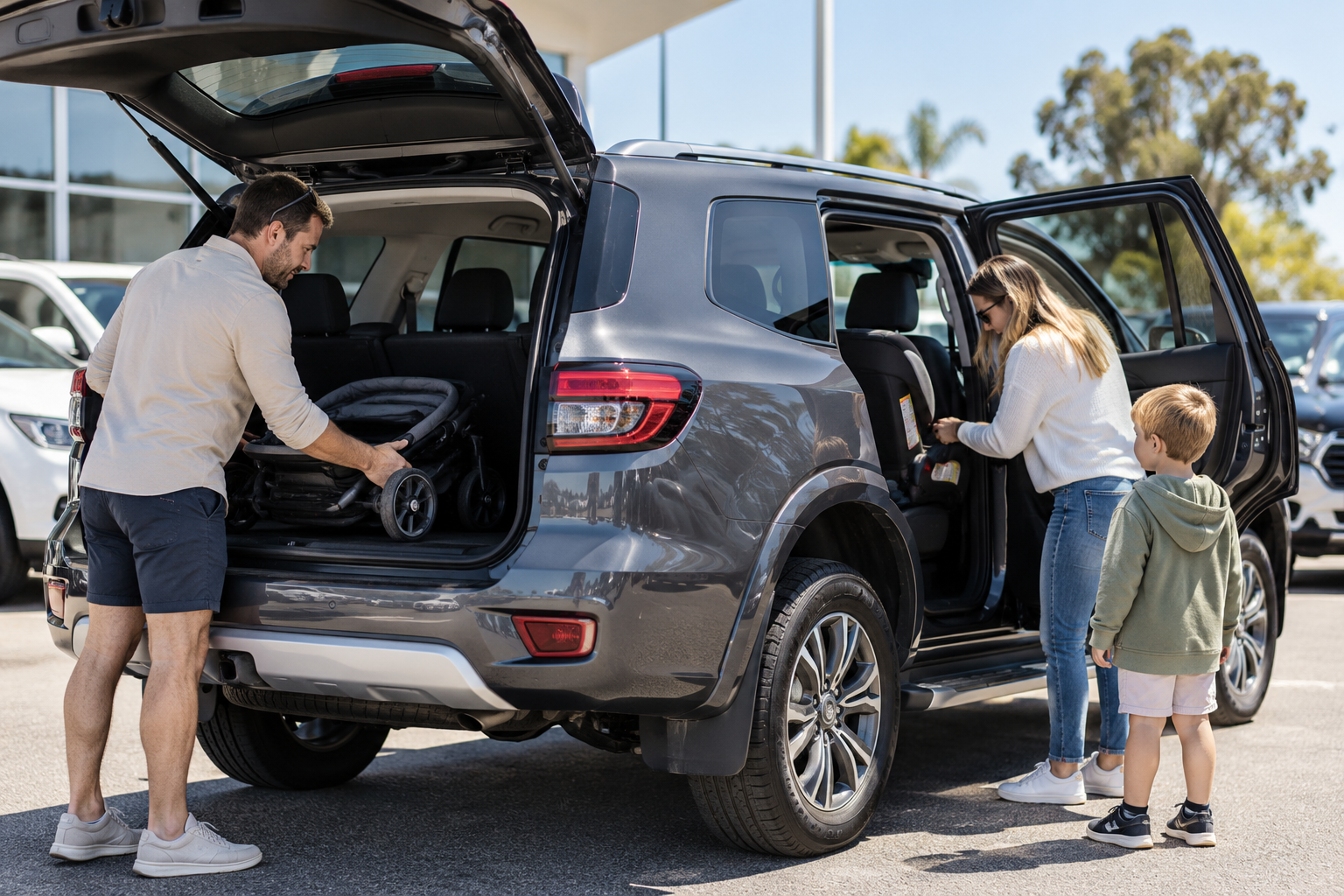
Fit any child seat while parked and follow both the car manual and the seat manual. Check which seats in this car have ISOFIX points and top tethers and don’t guess. Some rows or centre spots may not have them. Check buckle access and leg space with the seat fitted, then remove the child seat before you move folding parts again.
Sit in the driver seat and set it where you’d normally drive. Check that you can see clearly at junctions and over small shoulders in the back. Check mirrors and rear glass with all rows up. Try the main controls for air and audio without looking down for long. Vents that don’t reach the back can frustrate families, so ask your kids early whether they’re comfortable.
Get kids in and out
Don’t rush this part.
Have the kids climb in as they would after school. Watch how they use the grab handles and side steps. See if school shoes scuff trim or if doors feel heavy for them. Check head space in each row they will use, with the row in front set for an adult so you can judge knee space too.
If grandparents or teens ride along often, bring them too. An adult should sit in the row your family will use least. That test tells you if the back is fine for short trips or best kept for kids only. Talk through who sits where and how that arrangement fits your weekly routine.
Once you have a shortlist, browsing ford everest for sale perth listings is a quick way to compare local cars side by side before you book drives.
Load the boot with real stuff
Bring the pram you use and your normal shopping load. If that example has a third row and you need to use it, put it up first and see what fits behind it. Try your pram without taking wheels off. Add school bags and a grocery bag. If you usually pack the pram and school bags together, test that exact mix because boot space with the third row up is far tighter than it looks in photos.
Fold one side of the back row with the boot empty and people out of the way. Check if the floor sits fairly flat and if there is a lip to lift over. Practise the release straps or levers twice. Stiff or jammed releases get old fast when you’re using them every day.
Look at seat fabrics and floor mats with daily clean-ups in mind. Dark trims and washable mats save time with kids.
Drive it like your week
Only head off once seats are fitted right and all kids are restrained as the manuals require. Take the route you know, with school zones and a freeway spell. Keep speeds and turns normal. You’re there to get a feel for daily driving.
Ask second-row passengers about noise and comfort. Can they hear you without shouting? Check whether the seats support small backs on longer stretches. Note blind spots at roundabouts and in car parks. Check that kids can see out without straining and that air reaches them.
Feel how it steers through suburban streets and how it stops in traffic. It should track straight with light input and stop without fuss. Listen for rattles that would bug you on school runs. If your week includes school drop offs and a long freeway run to visit family, drive that full mix to judge comfort over both.
Park, debrief and book a check
Finish with car park practice. Try your usual centre for tight bays and ramps. Check camera views and sensors with kids staying seated. Check door clearance in a safely parked position without touching neighbouring cars. Consider whether you can help children in and out on the kerb side, away from moving traffic.
Test night visibility if you can book an evening look. Check headlights on unlit roads and cabin lights for night buckles. Try the tailgate height in a low garage.
Ask each kid what bugged them after the drive. Sore backs and hot seats don’t show in photos. Talk through school runs and weekend trips. Consider whether the seating plan worked. Think about how quickly everyone got in and out. There’s no perfect car, but the right one should make busy days calmer.
Shortlist two or three suitable used cars rather than falling for the first clean one. Compare how each fits the same seats and the same pram. Then book a professional inspection for your pick before you talk price. That separate check covers mechanical items outside a family drive and gives you peace of mind.
The best test is boring on purpose. If an Everest makes your normal loop easy, you’ve found your family fit.